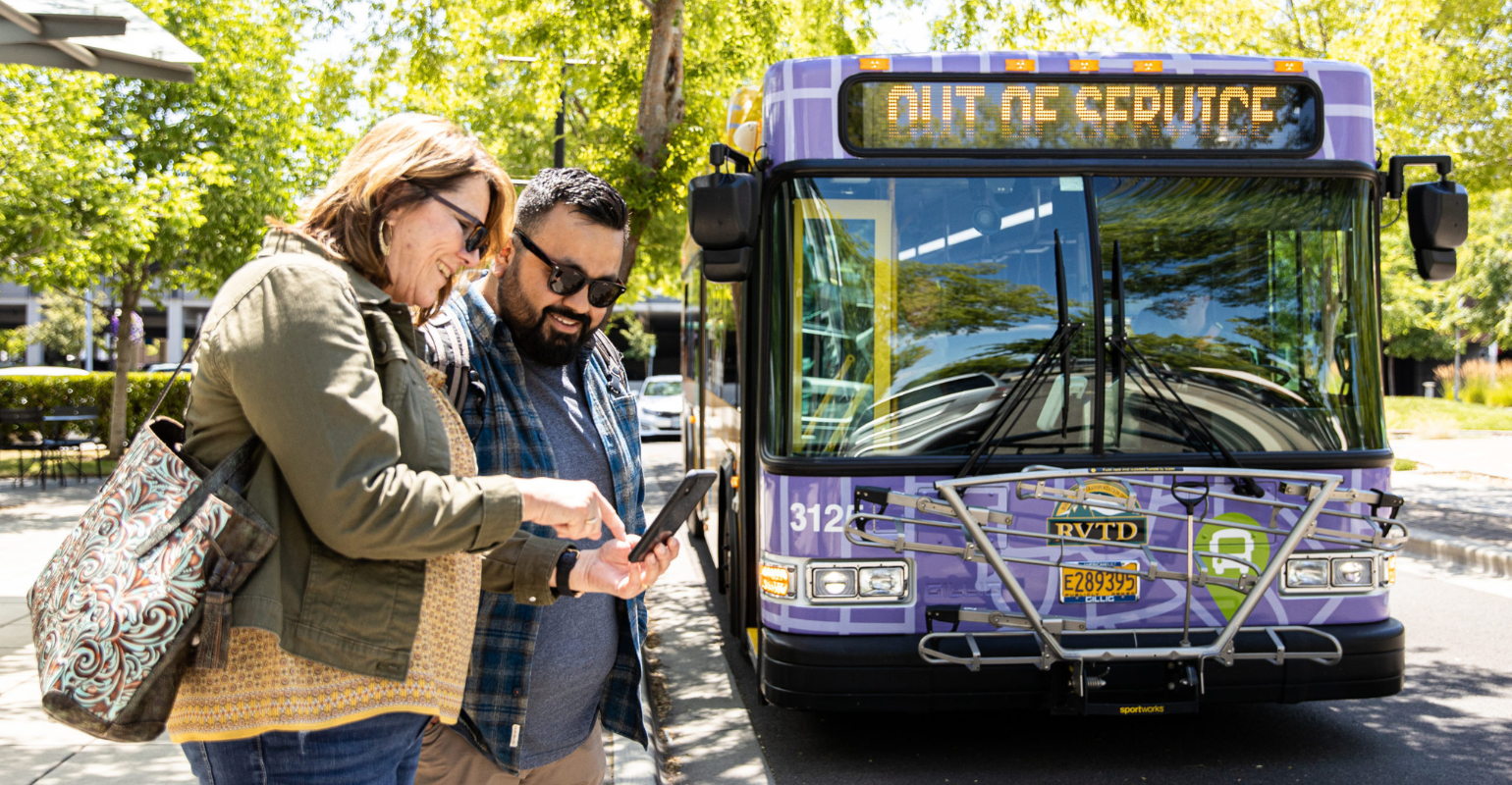
Rogue Valley Transportation District (RVTD) in Medford, Oregon, made transit technology history in 2021 by becoming the first agency in the U.S to implement the NAVINEO CAD/AVL system, developed by Systrans, an Equans company. Despite launching during the height of the COVID-19 pandemic, the project delivered a sophisticated, data-driven platform that has transformed how RVTD manages operations, serves passengers, and plans for the future.
Five years later, the partnership between RVTD and Systrans, an Equans company, stands as a model for successful technology implementation and the measurable operational benefits that emerge when transit agencies invest in superior systems.
A Pandemic-Era Implementation Against All Odds
The NAVINEO CAD/AVL system implementation officially kicked off in 2020 under extraordinary circumstances. With strict COVID-19 protocols requiring five-day quarantines for out-of-town personnel, daily testing, and vaccination documentation, what was planned as a six-month installation presented unprecedented challenges.
“I think it was probably the most unique project, perhaps, for both RVTD and for Systrans,” said Paige West, RVTD Planning and Strategic Programs Manager. “We had requirements for quarantining for five days for anyone that was coming on site from out of the area. There was a lot of on-site work that had to be done as part of this project. But even though that was a challenge, I think I was really impressed by everyone from installation to project managers being very nimble and flexible with what they needed to do.”
Despite these obstacles, the project remained on schedule and on budget, a remarkable achievement given the unprecedented disruptions. The Systrans team’s willingness to absorb quarantine-related costs and adapt to constantly changing protocols demonstrated a level of partnership that extended well beyond contractual obligations.
Continuous Support and Relationship Building
What distinguishes the RVTD-Systrans partnership is the sustained commitment to regular engagement. Six years after implementation, the teams continue to meet monthly for system check-ins—a practice that began with weekly meetings and evolved as the system matured.
“We’ve had, for quite a long time, weekly meetings. We went to twice a month. And now half a decade later, we’re still meeting on a monthly basis,” West noted. “I think that’s a pretty unique service offering that Systrans has compared to other software and hardware companies that we work with. Even if it’s just a five-minute check-in, sometimes it’s just knowing that you’ve had that ability to converse as a team.”
This consistent engagement creates efficiencies that go far beyond traditional vendor-customer relationships. Rather than working through impersonal ticketing systems, RVTD can bring together stakeholders from both organizations to solve problems collaboratively.
Driver and Dispatcher Adoption
RVTD’s procurement process involved drivers and dispatchers from the beginning, a decision that proved critical to both system selection and ultimate user adoption. The NAVINEO mobile data terminals (MDTs) with turn-by-turn navigation became an immediate driver favorite and remains the most-cited feature six years later.
“One of the first things that sold that review team, especially on the driver’s side, and continues to this day, is the mapping and turn-by-turn directions that’s on the MDT,” Planning Coordinator Sean Eisma said. “We kind of joke sometimes within our staff about how reliant they’ve become upon the turn-by-turn directions. It used to be the old school way, which was if you had a detour coming up, your field supervisor or transportation manager was drawing up a map and posting it on the boards for the drivers to see.”
With the NAVINEO CAD/AVL system, dispatchers can input detours directly into the system, and drivers receive updated turn-by-turn navigation in real time. The flexibility to toggle between map view and list view accommodates different driver preferences, while the system’s offline functionality ensures operations continue even during internet outages.
The canned messaging feature also provides drivers with a professional tool for managing passenger behavior. Pre-recorded announcements about rules like no eating or drinking can be triggered with a button press, allowing drivers to address issues without confrontational direct communication.
Data-Driven Planning and Service Optimization
NAVINEO solutions’ analytical capabilities have fundamentally changed how RVTD approaches service planning, performance management, and board communications. The system provides objective data to validate or refute operational concerns, enabling evidence-based decision-making.
When drivers reported consistently running late on a newly consolidated route, schedule adherence data confirmed the issue was systemic. Conversely, when similar complaints arose on another route, the data revealed that actual performance patterns did not support the concerns. This ability to distinguish real problems from perceived ones has improved both route planning and employee relations.
Automatic Passenger Counter (APC) data at the stop level has proven particularly valuable for right-sizing the fleet and understanding passenger load patterns. When RVTD reduced service frequency on Route 10 from 20 to 30 minutes due to budget constraints, APC data revealed severe overcrowding, with up to 66 passengers on buses designed for 30 seated passengers. This objective evidence proved essential for board communications and future service restoration planning.
The data proved equally critical when RVTD faced the difficult decision to cut 10 routes during a service reduction, leaving just six routes in operation. NAVINEO data helped identify which routes to preserve based on passenger activity, schedule adherence, and system performance rather than anecdotal evidence or political pressure. As Eisma explained, the data-driven approach “keeps it from looking like a guessing game” and shows the board “exactly where passengers are getting on and off.”
Advice for Other Transit Agencies
Based on six years of experience with the NAVINEO CAD/AVL system, RVTD leaders offer specific recommendations for agencies considering the system:
Conduct a Technology Audit First
Understand what existing systems are working, what needs replacement, and what integration requirements exist before starting procurement.
Involve End Users in Procurement
Operators, dispatchers, and other frontline staff who will use the system daily can identify operational benefits and limitations that administrators might miss.
Ensure Technical Expertise on the Review Team
NAVINEO’s power lies in its configurability and analytical depth, but this can initially appear overwhelming compared to rigid plug-and-play systems. Having technically savvy team members who can understand and communicate the value of customizable workstations and data tools is critical.
Looking Forward
Five years into deployment, Systrans continues to support RVTD’s operational needs and planning objectives. The NAVINEO CAD/AVL system’s durability, across both hardware and software, has exceeded expectations, and RVTD’s ongoing partnership with Systrans ensures the platform will continue to evolve alongside its service needs.
For smaller agencies like RVTD, which reduced from 45 buses in service to 30 during recent service cuts, accessing superior technology and vendor support has historically been challenging. The Systrans partnership shows that agency size doesn’t have to limit access to world-class transit technology, as long as the vendor prioritizes long-term relationships over quick sales.