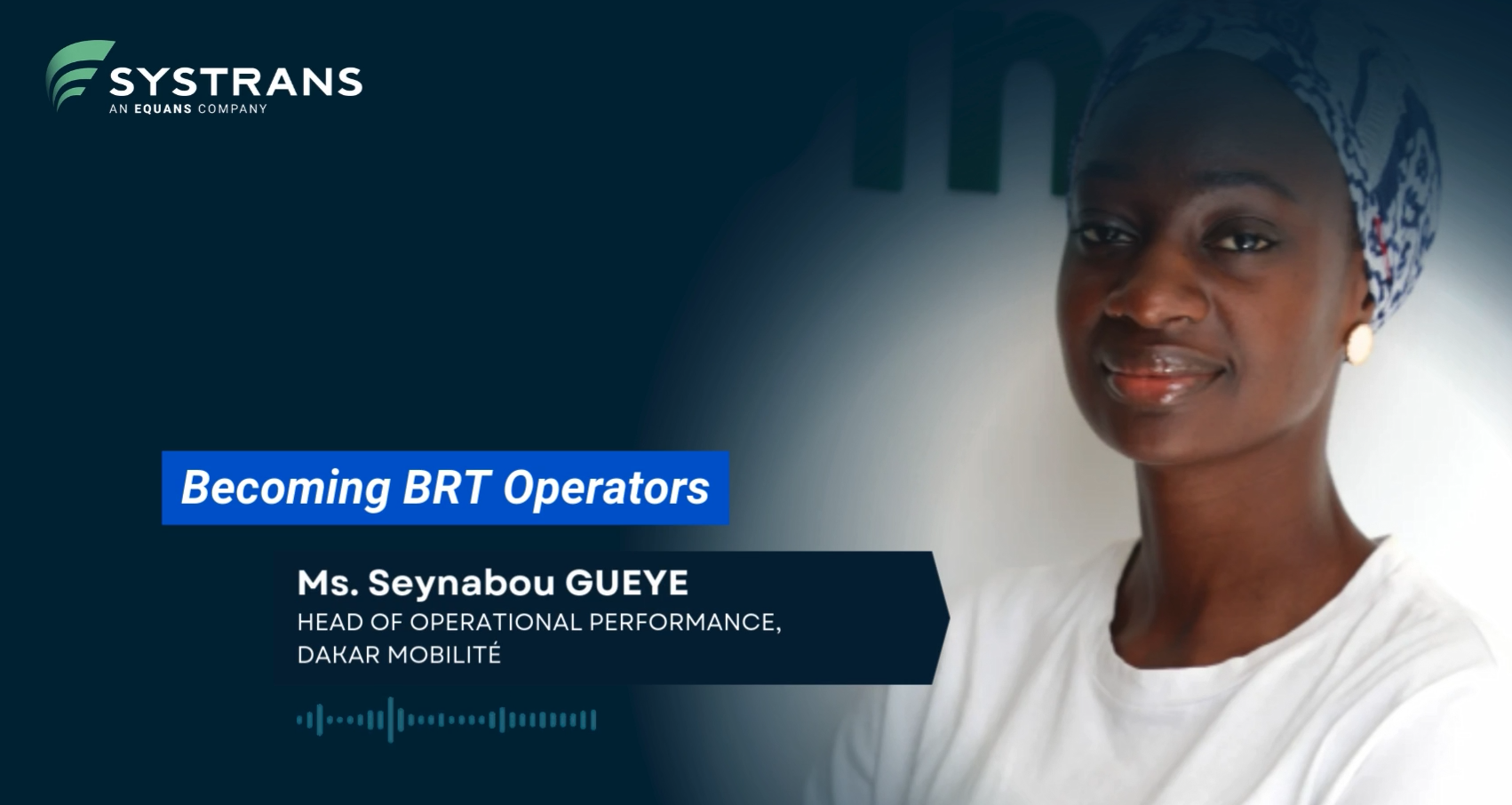
Since the launch of West Africa’s first Bus Rapid Transit (BRT) system in 2023, Seynabou GUEYE, Head of Operational Performance at Dakar Mobilité and the teams at Dakar Mobilité’s Operations Control Center (OCC) have relied every day on the NAVINEO Computer-Aided Dispatch/Automatic Vehicle Location (CAD/AVL) system from Systrans, an Equans company. Serving as the operational backbone of the public transit network, NAVINEO supports the management of a fleet of fully electric buses running on a dedicated corridor across Senegal’s capital city.
Here are the key features that drive day-to-day operations.
Operationally Driven Features
Real-time vehicle tracking
Real-time GPS tracking of every bus is considered “essential” by Seynabou. It allows teams to instantly locate any vehicle in case of an incident or driver request, respond quickly to ensure passenger safety, and support real-time service management decisions.
Schedule management and visualization
The system displays planned schedules alongside actual service performance. This enables controllers to continuously monitor headway deviations, anticipate disruptions, and act proactively to maintain the promised service frequency, currently 6 minutes during ramp-up, with a target of 3 minutes.
Network overview and load management
The system’s dashboard provides a visual overview of the entire network. Color-coded alerts indicate in real time when a bus is nearing its maximum passenger capacity, triggering immediate operational adjustments.
Battery charge monitoring
For a fully electric network, battery monitoring is critical. The CAD/AVL system displays the charge level of each bus in real time. When levels drop too low, controllers contact the driver and coordinate vehicle recharging with station supervisors at key interchange hubs.
Communications
The CAD/AVL system centralizes all communications via professional radio (TETRA) and/or Voice over IP (VoIP) networks. Controllers receive calls and assistance requests from drivers through onboard consoles, respond directly from the operations control center, and maintain a complete log of all communications. Field staff are equipped with handheld devices integrated into the system.
On the passenger information side, a dedicated team within the control center sends real-time updates to buses, stations, and passenger information displays using a library of pre-defined messages or custom alerts during disruptions.
A System Supporting a Broader Vision
These features are not an end in themselves. They make it possible to deliver on daily commitments to Dakar’s riders: on-time buses, reliable information, and efficient management of an electric fleet.
With plans to expand to 110 buses, 4 lines, and a target frequency of 3 minutes, the network will continue to scale. Seynabou embraces this challenge confidently: “It’s definitely a challenge, but one we are more than capable of meeting.”
This growth is exactly what the system was designed for, supported by Systrans’ ongoing partnership: monthly check-ins, continuous availability, and a dedicated point of contact for system upgrades.
Dakar hasn’t just launched a BRT. It has laid the foundation for a scalable, sustainable operational model built to grow.