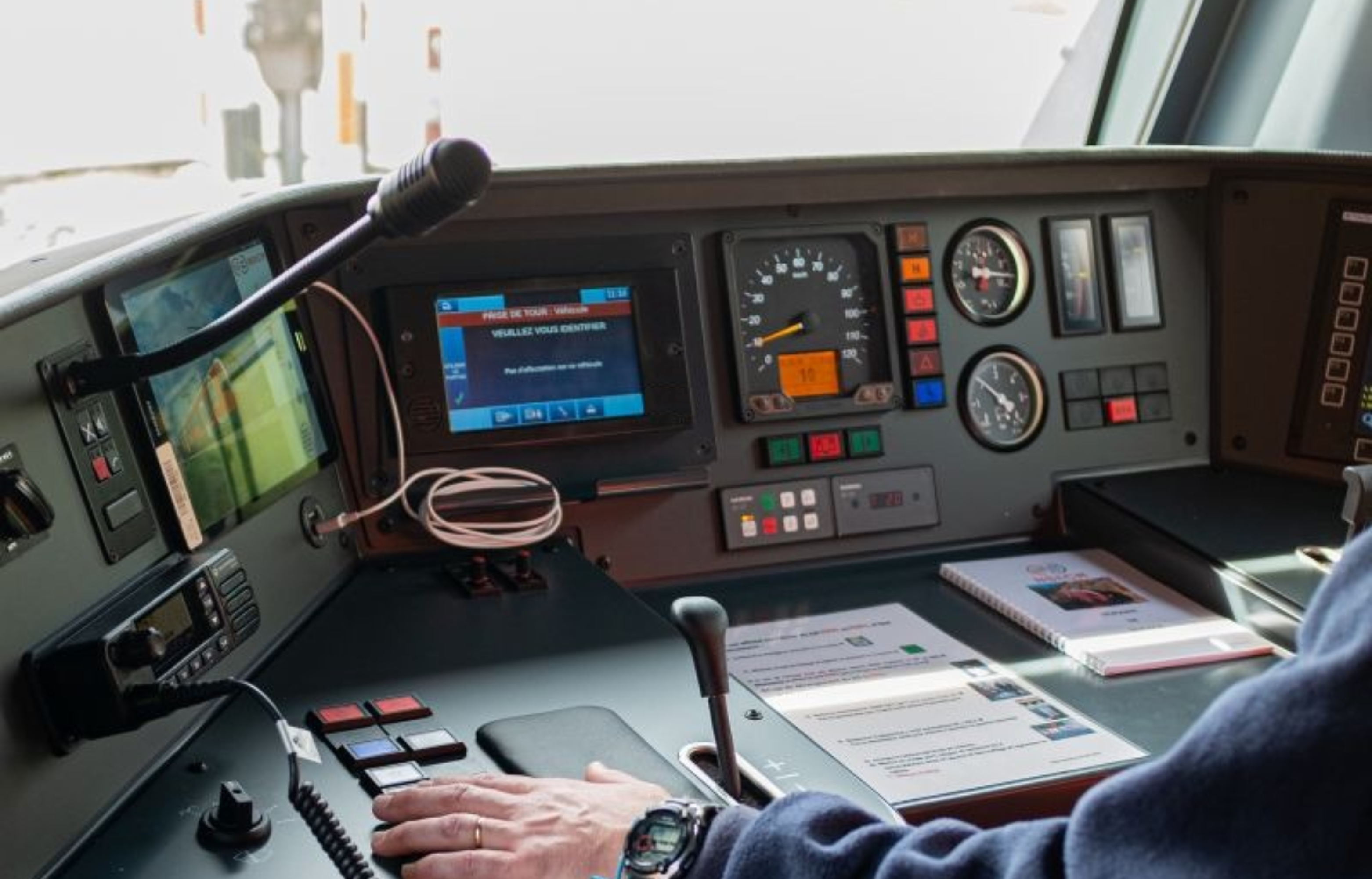
A real-time rail operations and passenger information system is an essential tool for managing rail operations. It enables operators to continuously compare actual service with planned service, identify deviations, and take proactive action before service quality is affected.
Across the European Union, rail is expected to carry more passengers, support the modal shift, and improve service quality. National recovery and resilience plans allocate nearly €48.9 billion to rail transport. More than €34.4 billion is dedicated to the Trans-European Transport Network (TEN-T) and the deployment of the European Rail Traffic Management System (ERTMS) [1].
At the same time, the opening of the rail market to competition is reshaping relationships between transport authorities, incumbent operators, and new entrants. But increasing rail service cannot be achieved through investment programs or tender processes alone. It has to work every day, in real-world operating conditions.
In short: what is a real-time rail operations and passenger information system used for?
With a real-time rail operations and passenger information system, operators can continuously monitor operational performance. Deviations between the planned service and the service actually delivered are detected, allowing the system to help operators adjust service, coordinate their response to incidents, and recalculate reliable and accurate passenger information.
Running more trains makes rail operations more complex
Rail is a high-capacity mode of public transport. While buses and coaches provide extensive local coverage, rail forms one of the backbone networks of a region. It can quickly carry hundreds, and sometimes thousands, of passengers along the same corridor.
The challenge now is to make more intensive use of this capacity. Some transport authorities are asking operators to significantly increase service levels without a corresponding increase in rolling stock, infrastructure, or available resources.
For operators, the equation becomes more challenging. As the number of train movements increases, even a minor disruption can trigger others: an unavailable trainset, a delay, a track incident, or the temporary inability to serve part of a route can disrupt several services and jeopardize passenger connections.
Operators therefore need to take a proactive approach, adapting their service to deliver the best possible service despite disruptions.
Monitoring rail service performance in real time
A service plan defines the service to be delivered. It sets out train movements, schedules, stopping patterns, and the resources required. But it cannot anticipate everything that will happen during day-to-day operations.
It is precisely in the gap between what is planned and what actually happens that service quality is determined.
Ludovic Mirault, NAVINEO Rail Sales Manager at Systrans, an Equans company |
That is the role of NAVINEO Rail, Systrans’ rail operations monitoring and supervision solution, part of Equans: to continuously compare planned service with actual service delivery, helping operators maintain the best possible service under the circumstances. The aim is not to eliminate every incident, an attractive but unrealistic promise, but to give operational teams the tools they need to make decisions and coordinate their response at the right time.
Adapting service
When an incident disrupts normal train operations, decisions need to be made: changing stopping patterns, reorganizing train movements, introducing replacement services, and coordinating the teams involved.
NAVINEO Rail centralizes and consolidates the data required for operational management and gives teams a shared view of the service currently being delivered. This allows them to monitor how the situation evolves in real time, assess the impact of their decisions, and continuously reassess the service that still needs to be delivered.
In an environment where every minute of delay can affect multiple train movements, this shared understanding reduces the time needed to make decisions, coordinate the response, and assess the impact of operational choices.
Keeping passengers informed in real time
When a train is delayed or canceled, passengers may understand the disruption. They are far less likely to accept late, conflicting, or inaccurate information. Uncertainty can quickly undermine their trust.
Reliable passenger information starts long before information appears on station displays or in an app. It depends first and foremost on the operator’s ability to know exactly what service is currently being delivered and understand, in real time, the impact of each disruption.
As soon as operations deviate from the original plan, scheduled times are no longer enough. Arrival and departure times need to be recalculated, services and stops that are maintained or canceled need to be identified, and the updated data must be distributed across the various passenger information channels.
NAVINEO Rail generates this real-time operational data and makes it available to the various passenger information channels and stakeholders involved:
- platform displays;
- onboard passenger information displays;
- apps and digital services;
- train drivers and operations teams;
- monitoring tools used by transport authorities.
Based on the same operational picture, information can then be tailored to each passenger’s situation. Someone waiting on a platform wants to know when their train will actually arrive. Someone already onboard wants to know when they will reach their destination and whether they will make their connection.
Rail operations supervision and passenger information are therefore not separate processes. They rely on the same source of truth: knowing what service is actually being delivered.
Measuring rail performance
Punctuality, regularity, and compliance with the service plan are not simply indicators published in a monthly report. They reflect commitments made by an operator to a transport authority.
NAVINEO Rail makes it possible to monitor these indicators while the service is being delivered, rather than reconstructing them only after trains have operated. Operators can monitor service performance as it is delivered, identify deviations, and establish the operational conditions in which they occurred.
This capability addresses two key objectives:
- taking action before performance is irreversibly affected;
- having reliable data to report on the service actually delivered.
A real-time rail operations and passenger information system therefore becomes both an operational management tool and a source of evidence for contractual performance.
From urban operations and passenger information systems to rail
Systrans draws on more than 40 years of experience in supervising bus and tram networks. This background gives Systrans, an Equans company, extensive expertise in the core challenges of public transport operations: real-time operations, service regulation, passenger information, and disruption management.
However, NAVINEO Rail is not simply the rail version of an urban operations and passenger information system.
Rail operates within a specific technical and regulatory environment, structured around train paths, kilometer points, signaling systems, and the safety requirements specific to heavy rail. NAVINEO Rail therefore builds on proven approaches from urban public transport while adapting the technical solution to rail-specific data, interfaces, and processes.
The solution covers several areas of rail operations: traffic supervision, incident management, service adaptation, passenger information, onboard systems, intermodal coordination, and performance analysis.
The success of rail market liberalization also depends on operational performance
Modernizing infrastructure and renewing rolling stock remain essential. But increasing service levels also depends on operators’ ability to monitor service and take a proactive approach to adapting operations to deliver the best possible service: managing disruptions effectively, coordinating decisions, and providing passengers with reliable, accurate, real-time information.
Are you preparing to launch a new rail line, transform your operations system, or increase rail service levels?
Meet our experts to discuss how NAVINEO Rail can address your day-to-day operational challenges.
Source