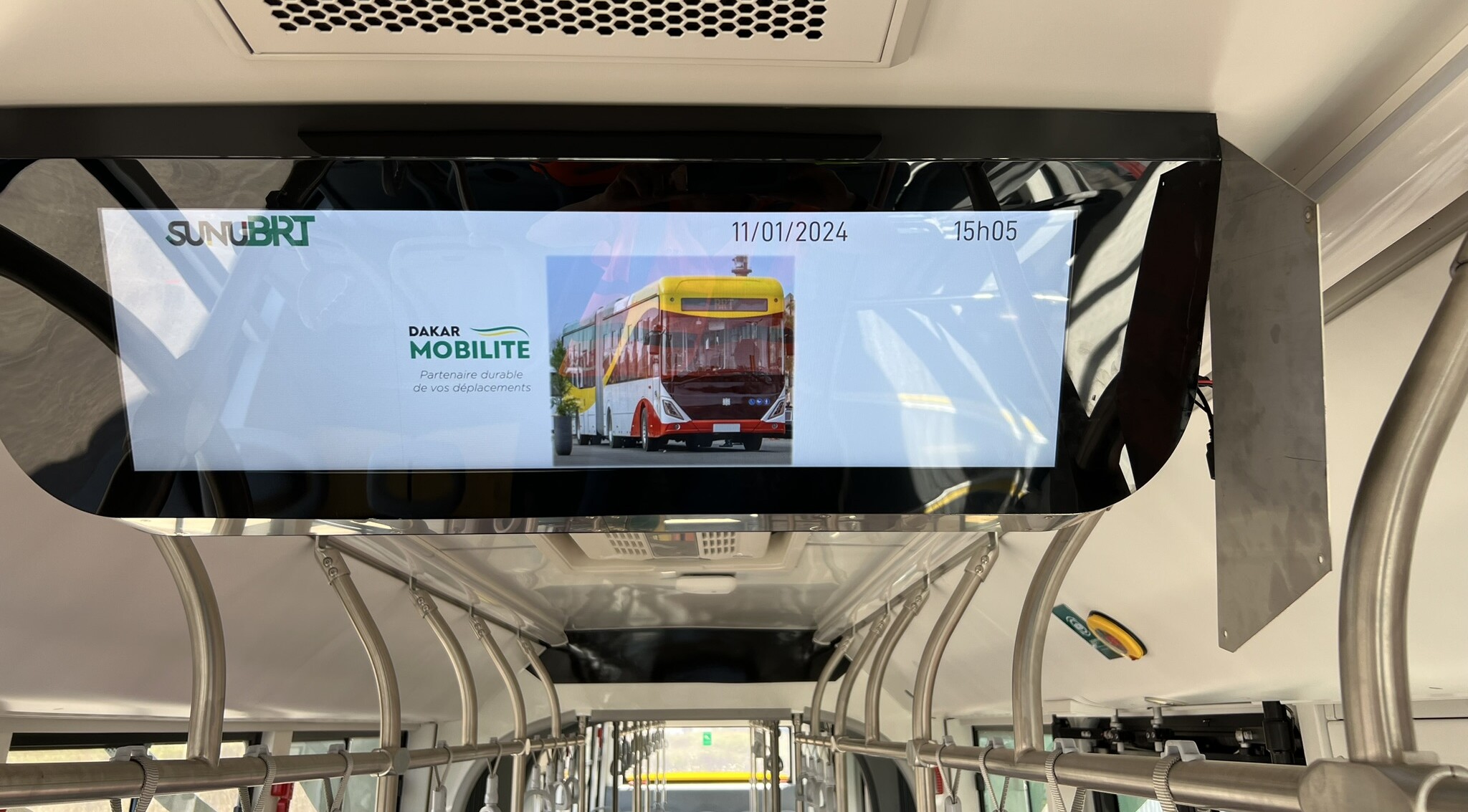
Mass transit projects are often evaluated through the lens of their infrastructure, technologies, or performance metrics. Yet the experience of Dakar’s BRT (Bus Rapid Transit) highlights a fundamental reality: no major transport system can operate sustainably without strong, continuous, and shared human commitment.
As part of the rollout of the first 100% electric BRT in Sub-Saharan Africa, the Systrans teams played a decisive role, well beyond simply delivering a CAD/AVL system. The team’s contribution followed a comprehensive support approach at every stage of the project, within a highly demanding technical, organizational, and human context.
This approach, built on agility, adaptability, and a strong solution-oriented mindset, helped establish a climate of trust between teams — an essential condition for the success of such a large-scale project.
A Continuous On-the-Ground Presence
Beyond technology, the success of Dakar’s BRT relied on a crucial factor: continuous, structured human support at every step of the project. For Cheikh Yatt Diouf, CEO of Dakar Mobilité, this human dimension was just as decisive as the robustness of the deployed systems.
From the earliest phases, the support went far beyond providing a technical solution. It covered the entire project lifecycle:
- Upstream, during studies and functional scoping
- During deployment, amid evolving infrastructure
- Throughout the ramp-up of operations
- During daily network operations
This continuity ensured the NAVINEO CAD/AVL system, developed by Systrans — an Equans company — was embedded into the operational reality of the network from day one.
Training, Building Familiarity, and Developing Skills
Today, Dakar Mobilité employs about 770 people, 40% of whom are women. A significant portion of these teams, especially operators, had no prior experience in public transit operations. The BRT project therefore, had to focus on developing new skills rather than relying solely on existing ones.
The deployment of the NAVINEO CAD/AVL system was paired with a structured skills transfer program, built around several pillars:
- Initial training for operators and riders
- Progressive adoption of tools in real operating conditions
- Development of operational expertise within local teams
- Emergence of internal experts able to analyze and leverage operational data
Teams took ownership not only of the tool but also of the core functions of supervision, regulation, and performance management within a mass transit network.
A Working Relationship Centered on Operational Problem-Solving
In a context marked by tight timelines and evolving infrastructure, the support provided by Systrans, an Equans company, stood out through a clear and consistent stance from both on-site and remote teams: prioritize solving operational issues, even beyond contractual obligations.
This direct and continuous approach fostered genuine collaboration, team cohesion, and even a shared sense of personal responsibility among all contributors to the deployment and implementation of the project.
“Faced with the challenges encountered, the Systrans teams focused on finding concrete solutions to move the project forward. Their adaptability, availability, and commitment strengthened the trust between Dakar Mobilité and Systrans.”
– Cheikh Yatt Diouf, CEO of Dakar Mobilité
This level of engagement helped secure the commissioning schedule, support the operational ramp-up, and maintain a consistent project trajectory despite constraints. Everyone stayed the course.
A Long-Term Technical Dialogue
As local teams gradually strengthened their expertise, the nature of the exchanges evolved. Today, Dakar Mobilité has team members who have become reference points on all NAVINEO-related topics, able to engage in highly technical discussions.
This ongoing dialogue focuses particularly on:
- Functional enhancements to the system
- Advanced data usage
- Optimization of supervision and performance management
- Adapting the system to the specific characteristics of the network
Human support did not stop at commercial launch. It remains part of an ongoing improvement approach, serving both operational performance and the public service mission entrusted to Dakar Mobilité.
When Technology Becomes a Driver of Professionalization
The Dakar BRT experience shows that a CAD/AVL system is not just a technological foundation. When deployed with structured human support, it becomes a driver of staff professionalization, collective skills development, and long-term operational stability.
In Dakar, this human dimension has become one of the pillars of network performance and a key factor in its capacity to evolve over time.