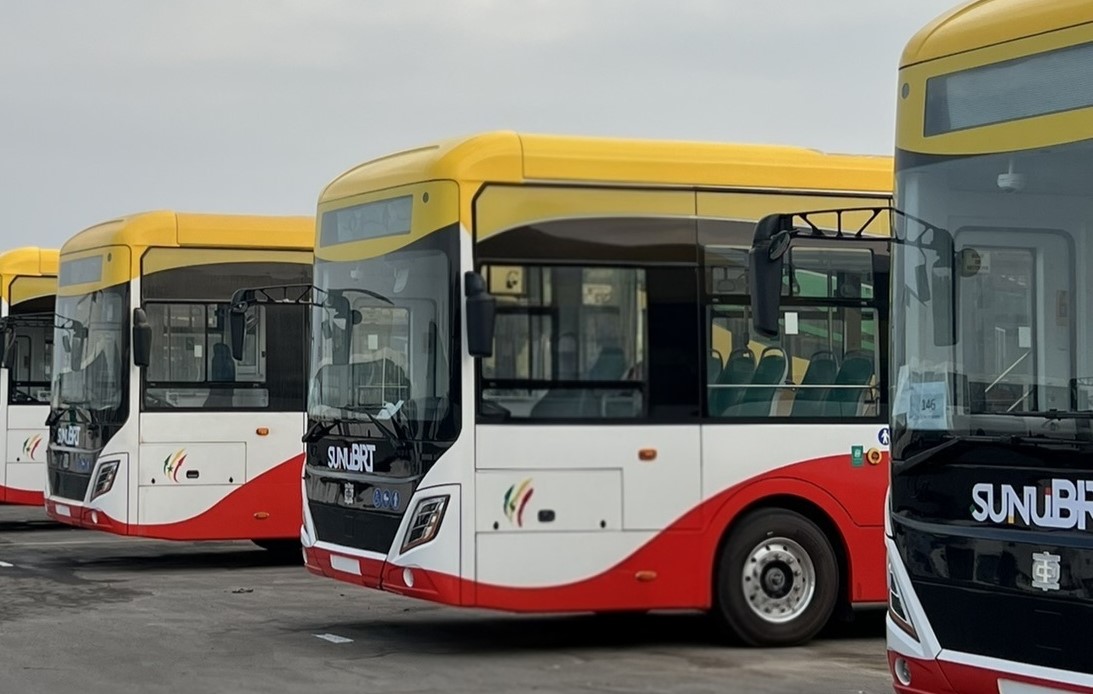
For Cheikh Yatt Diouf, CEO of Dakar Mobilité, the success of the Dakar BRT is assessed first and foremost from the passenger perspective. Bus regularity, trip safety, reliable information, ease of use, and service accessibility: the day‑to‑day experience of riders is a strong indicator of public transit network performance.
This focus on passenger experience is not at odds with operations. On the contrary, it is structured, measured, and managed through data, within the framework of a performance‑based contract signed with the Government of Senegal. In this context, the NAVINEO CAD/AVL system, developed by Systrans, an Equans company, plays a central role in the overall operating model.
An Objective Passenger Experience Measured Through Performance Indicators
Dakar Mobilité operates the BRT under a demanding contractual framework based on measurable and verifiable performance indicators. A significant share of these indicators is directly fed by data generated by the NAVINEO CAD/AVL system, ensuring continuous, objective measurement of service quality.
The granting authority also has access to selected system modules, enabling shared monitoring of operational performance. This arrangement strengthens transparency, institutional trust, and the ability to manage the network based on factual data.
The observed results confirm this approach:
- 93% passenger satisfaction, measured in the latest survey conducted in April 2025;
- a high level of regularity and punctuality;
- strong ridership, with more than 34 million passenger trips recorded over the first 20 months of operation. On weekdays, the BRT currently carries an average of 80,000 passengers per day.
These results reflect a passenger experience that is consistent, stable, and widely reliable within a dense urban environment.The reasons for passenger satisfaction are clear: buses are punctual, trips are safe, and information is accessible and easy to understand.
This perceived quality is based on the ability of the CAD/AVL system to provide real time operational visibility, support service regulation, and ensure service continuity. NAVINEO therefore directly impacts the key drivers of passenger experience, going well beyond a simple operational support tool.
Tangible Impacts on Daily Life and the Environment
Passenger experience is also measured through concrete benefits in everyday life. Before the BRT entered service, travel time between the northern suburbs of Dakar and the Plateau could reach up to 90 minutes. Thanks to semi‑express lines, this travel time has been reduced to approximately 45 minutes, offering passengers significant time savings.
This improvement translates into a direct social impact: more time for family life, less travel‑related fatigue, and greater trip predictability.
From an environmental perspective, the choice of a 100% electric bus network delivers an estimated reduction of 59,000 tons of CO₂ per year. Recent measurements also show that air quality inside BRT buses is significantly better than on other urban transport modes — up to three times better, according to available data.
Digitalization and Passenger Information
The transformation of passenger experience also relies on service digitalization. From the start of commercial operations, a mobile application was deployed, allowing passengers to:
- purchase tickets via their mobile phone;
- access routes ;
- check real‑time arrival times at stations.
The share of digital payments has grown from 10% at launch to 36% today, mainly through mobile money. This shift helps streamline the passenger journey, reduce paper usage, and make the service simpler and more efficient.
Thanks to NAVINEO, passenger information becomes a tool for anticipation: riders have access to the information they need even before arriving at the station, reinforcing trust in the service.
When Data Becomes a Driver of Experience and Trust
The Dakar BRT experience demonstrates that ITS systems are not just technical tools. By structuring performance measurement, supporting operational regulation, and feeding the dialogue between the operator and the granting authority, the NAVINEO CAD/AVL system becomes a direct lever for passenger satisfaction.
As highlighted by Cheikh Yatt Diouf, network performance cannot be reduced to figures alone: it is reflected in perceived regularity, air quality, time saved, and the daily trust riders place in the service.
In Dakar, passenger experience is inseparable from operational performance. By structuring the measurement, monitoring, and sharing of indicators, the NAVINEO CAD/AVL system makes it possible to turn contractual requirements into concrete, on‑the‑ground results.
This data-driven approach is what sustainably underpins service quality. NAVINEO clearly stands out as a central tool for performance, transparency, and service continuity in public transit.
To learn more about BRT, CAD/AVL, OCC, and ITS concepts, and to better understand the technical framework of the Dakar BRT project, please refer to our dedicated Dakar BRT FAQ: Dakar Launches Sub-Saharan Africa’s First Fully Electric BRT System – SYSTRANS