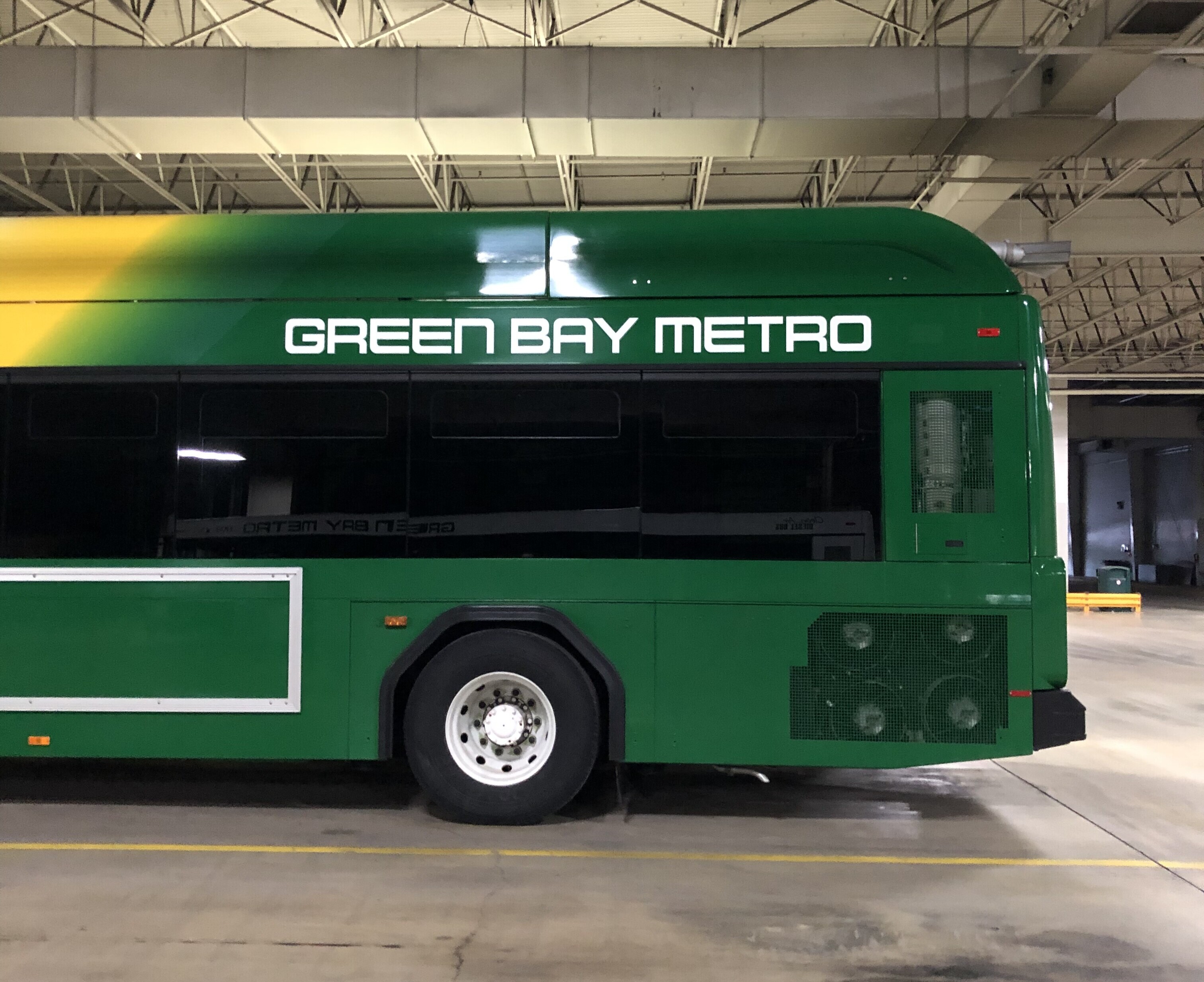
NTD reporting is a critical requirement for public transit agencies in the US. It helps transit systems operate effectively, plan services, and secure funding. For many small to mid-sized systems, staying compliant with National Transit Database (NTD) requirements can take significant time and resources. That used to be the case for Green Bay Metro Transit, until they rolled out the NAVINEO CAD/AVL system by Systrans.
Systrans, an Equans company, develops the NAVINEO integrated CAD/AVL and Automatic Passenger Counting (APC) systems, which have made a tangible difference for Green Bay, streamlining a process that once relied heavily on manual effort. Let’s take a closer look at how NAVINEO helps agencies like Green Bay improve the accuracy, efficiency, and ease of NTD reporting.
What is NTD reporting and why does it matter?
The National Transit Database, established in 1974, is the Federal Transit Administration’s primary tool for collecting and analyzing data from transit systems across the country. Agencies submit information on ridership, mileage, safety, and expenses. The FTA uses this data to allocate billions of dollars in federal funding.
NTD data also informs planning at the local, state, and federal levels. It supports transparency and accountability in public transportation.
The reports are detailed, highly specific, and time-consuming, especially without automation.
Before NAVINEO CAD/AVL: Manual counts, Spreadsheets, and long hours
For Patty Kiewiz, Director of Transit in Green Bay, NTD reporting used to be a much heavier lift.
“With our old system, we had to do manual passenger counts, and that meant our dispatchers and drivers were constantly documenting passengers getting on and off,” she explained. “We also had to do manual sampling throughout the year, which took up a lot of time and effort.”
Accuracy was another hurdle. Green Bay Metro’s previous APC system averaged just 70% accuracy, well below the 95% threshold required for certified NTD reporting.
That all changed with the NAVINEO CAD/AVL system.
APC Certification and time savings
Since switching to the NAVINEO CAD/AVL, Green Bay has achieved APC certification with more than 95% accuracy. That certification allows them to use their APC data for NTD reporting and significantly reduce manual workload.
“We used to spend up to 10 hours a month pulling data and filling out forms,” Kiewiz said. “Now, with NAVINEO CAD/AVL, we just run the report. The data is already formatted the way the FTA wants it.”
Systrans’ system calculates critical NTD metrics like Vehicle Revenue Miles (VRM), Vehicle Revenue Hours (VRH), and Passenger Miles Traveled (PMT). It also produces the S-10 form, a core part of monthly NTD submissions, with just a couple of clicks.
“Everything we need is in one place. It saves us time, reduces errors, and gives us confidence in the data we’re reporting,” she added.
The power of real-time data
Systrans’ Vehicle Logic Unit collects data in real time whenever the bus is in service. That includes:
- Boardings and alightings at each stop
- Door activity
- GPS-based trip information
- Wheelchair lift activations
This data is automatically time- and location-stamped, then uploaded wirelessly to the central system. The result is clean, accurate records that don’t need to be pieced together from multiple spreadsheets.
“Having that level of real-time data helps us not only with reporting, but also with planning and schedule adherence,” Kiewiz said. “We can identify issues more quickly and make adjustments where needed.”
Greater confidence in the data
The NAVINEO CAD/AVL system reduces the burden on staff by minimizing manual processing. With everything integrated into one system, there’s less room for error and a lower risk of missing important data.
“Before using the NAVINEO CAD/AVL, we were pulling information from several different sources to meet NTD requirements,” Kiewiz explained. “Now, our reporting is faster, cleaner, and easier to audit.”
Built for compliance and the future
The FTA continues to evolve its reporting requirements, including proposed changes for 2025 and 2026 that involve geospatial data and expanded safety reporting. The NAVINEO CAD/AVL is already built to align with those upcoming standards.
“We feel confident that as the NTD reporting requirements grow, NAVINEO is going to keep up with those needs. Their team is responsive, and they make sure the software stays current,” Kiewiz said.
NAVINEO CAD/AVL also helps agencies meet and exceed the 95% accuracy threshold required to report APC data directly to the NTD. In Green Bay, that means more accurate ridership numbers and potentially more funding.
A System that works for everyone
From dispatchers to planners to operators, the entire Green Bay Metro team has adapted well to the new system.
“Our drivers love that they don’t have to manually count passengers anymore. Our dispatchers can access data instantly. And our planners are using that data to improve routes and schedules,” Kiewiz said.
Green Bay riders are also seeing the benefits. “We’re providing more accurate information to the public now. It’s helping us rebuild trust in the reliability of our service.”
Final thoughts: From complexity to clarity
NTD reporting can be complex. As Green Bay Metro shows, with the right tools, it becomes a more efficient and manageable part of a transit agency’s workflow.
“The NAVINEO CAD/AVL took something that used to take us hours and made it simple,” Kiewiz said. “It’s not just about compliance. It’s about getting the data you need to run a better transit system.”
For transit agencies looking to streamline their NTD process, improve data quality, and reduce staff workload, Systrans and the NAVINEO CAD/AVL system offers a clear path forward. Just ask the team in Green Bay.