The latest version of the NAVINEO CAD/AVL and passenger information system: designed to meet the performance and sustainable mobility challenges of today.
Modern mobility challenges are diverse: optimizing fleet management, improving the passenger experience, ensuring the reliable real-time information, and addressing environmental concerns all require increasingly advanced tools. The new version of the NAVINEO CAD/AVL and passenger information system, developed by Ineo Systrans (an Equans company), rises to these challenges by pushing performance boundaries and offering an even more intuitive experience for users.
This latest iteration of NAVINEO represents a major step forward in managing public transport networks. But what specific innovations are we talking about exactly?
Enhanced power for the CAD/AVL system
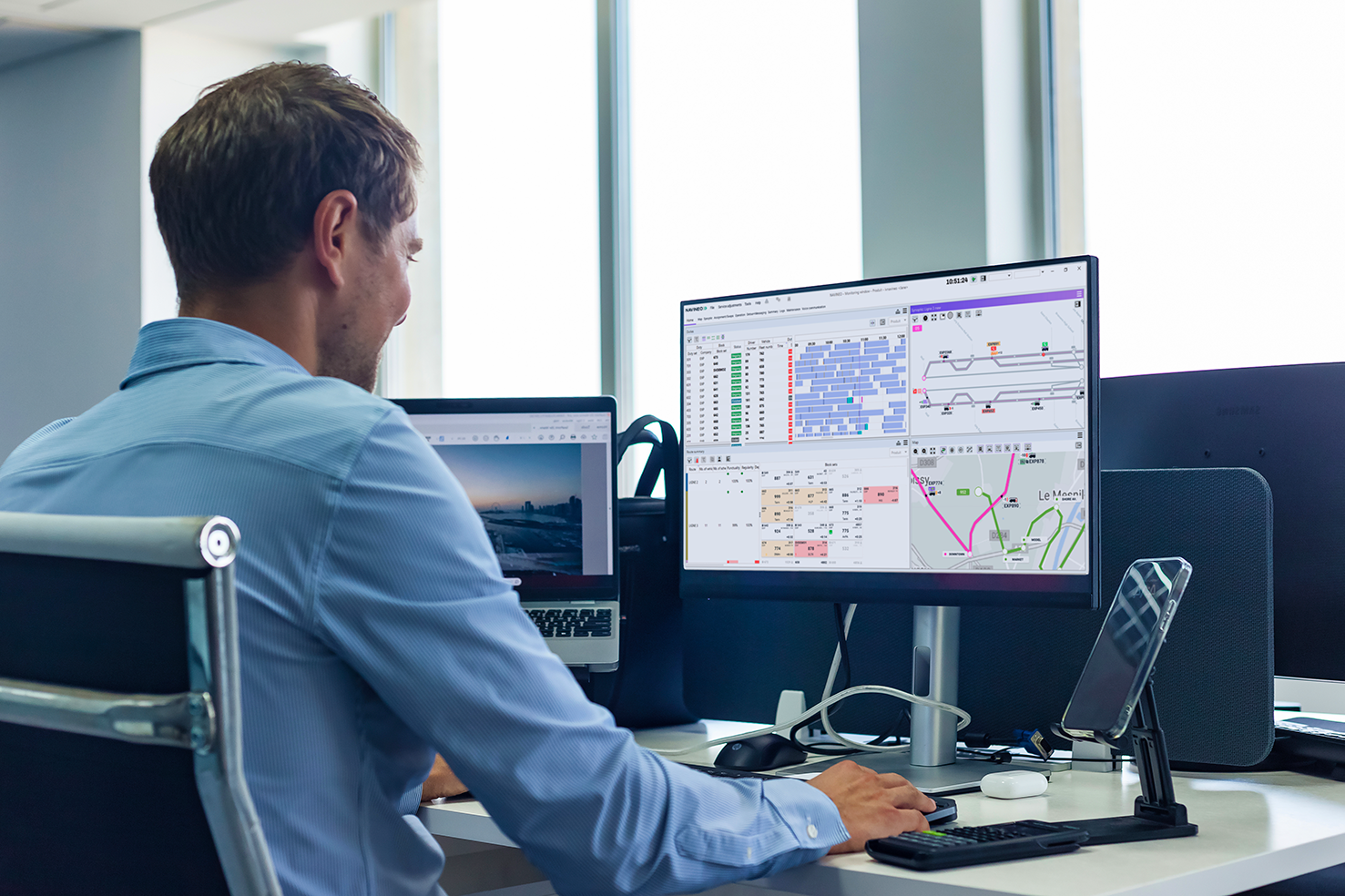
In the world of connected transport, performance is vital, and it has been significantly strengthened in this version. Capable of managing up to 10,000 vehicles simultaneously, the new NAVINEO system adapts to both small operators and large metropolitan networks. Thanks to improved data processing, operational reports, such as route regularity or stop-level passenger loads, are now much faster to generate. This analysis provides operators with the strategic insights needed to optimize scheduling and better tailor their network to daily fluctuations.
A reinvented interface for a better user experience
The effectiveness of a CAD/AVL system depends on more than just technical performance. Ergonomics and ease of use are essential for dispatchers and operators who need to analyze complex data and make quick decisions efficiently. That is why the new NAVINEO CAD/AVL and passenger information system has been redesigned to offer a more intuitive, modern, and user-friendly interface.
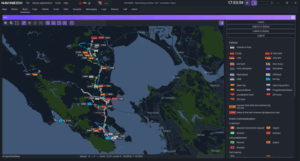
A clean, streamlined design helps reduce cognitive load for operators. The interface is clearer thanks to a new color palette and modernized icons, making it easier to distinguish key information. A light and dark mode has also been added to suit different working conditions and ensure optimal visual comfort regardless of the lighting.
een improved by reducing the number of clicks needed to access key features, offering a smoother menu layout, and reorganizing buttons to simplify navigation. These adjustments save dispatchers valuable time in their day-to-day tasks, allowing them to focus on real-time network management rather than unnecessary operations.